Examining Prime Minister Modi's Communication Strategy: A Diplomat's Perspective
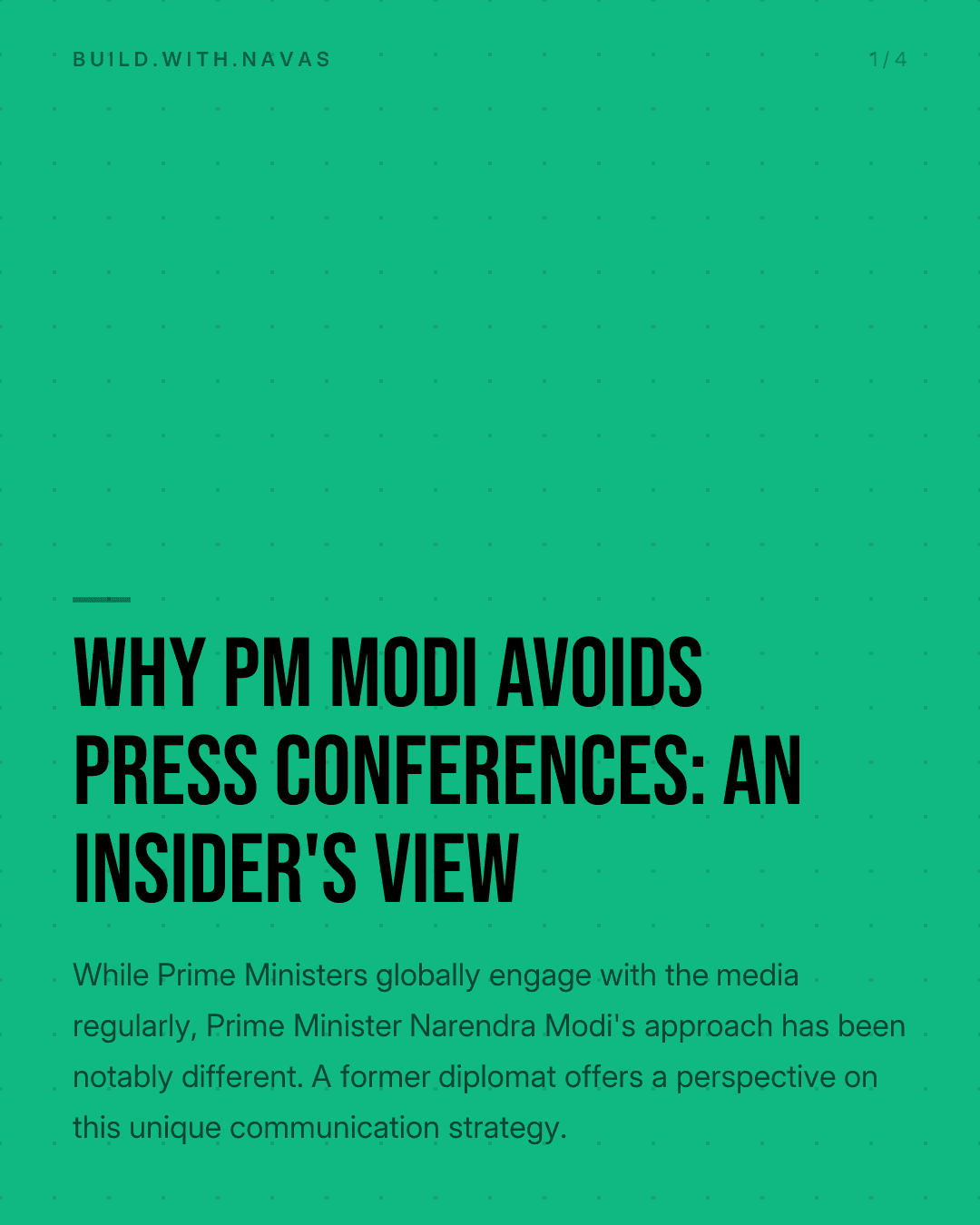
Prime Minister Narendra Modi's approach to engaging with the press differs significantly from that of many global leaders. While regular press conferences are a common feature of democratic leadership worldwide, PM Modi's tenure has been characterized by a more selective form of media interaction. A former diplomat has offered an insider's view on this communication strategy, shedding light on the potential reasoning behind this approach.
Ambassador Sreenivasan on Targeted Communication
Ambassador T.P. Sreenivasan, who has served as India's former Ambassador to the UN and possesses extensive diplomatic experience, suggests that Prime Minister Modi intentionally opts for targeted communication rather than open press conferences. According to Ambassador Sreenivasan, this is a calculated decision aimed at maintaining control over the narrative and mitigating the risks associated with unpredictable and potentially challenging questions that can arise in a free-flowing press conference format.