WHO Declares Global Health Emergency Amid Escalating Ebola Outbreak in DRC
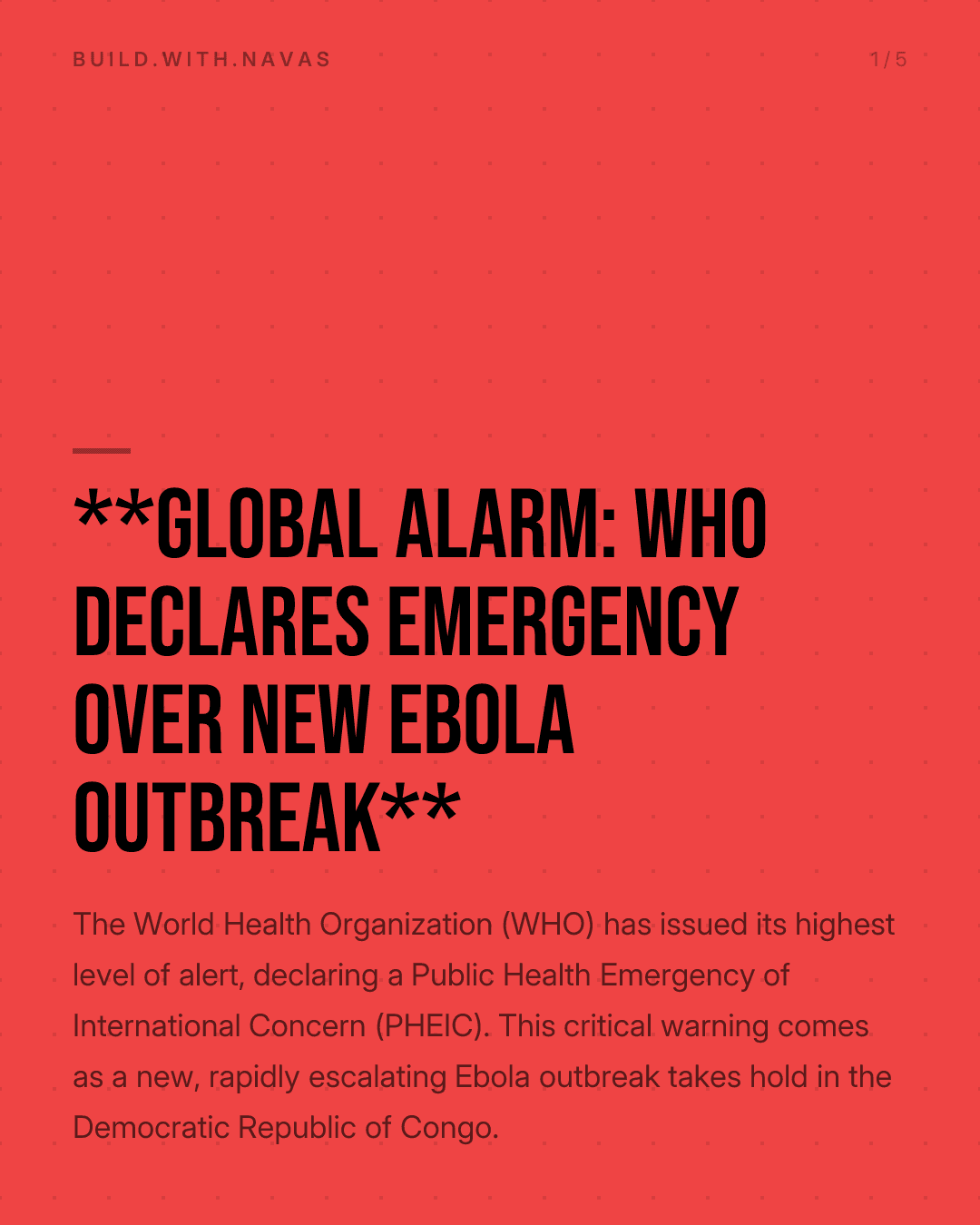
The World Health Organization (WHO) has escalated its response to a burgeoning Ebola outbreak by declaring a Public Health Emergency of International Concern (PHEIC). This designation, the WHO's highest level of alert, signals the gravity of the situation and the urgent need for a coordinated international effort. The outbreak is currently unfolding in the Democratic Republic of Congo (DRC), presenting a formidable challenge to global health security.
Understanding the PHEIC Designation and Its Implications
A Public Health Emergency of International Concern is reserved for extraordinary events that represent a potential risk to public health in other countries through the international spread of disease. Its declaration by the WHO underscores the possibility of international transmission and necessitates a robust, collaborative global response. This is the most serious call to action the WHO can issue, highlighting the critical nature of the current Ebola situation.
Challenges Mount in Eastern DRC Amidst Conflict and Insecurity
The current Ebola crisis is concentrated in the eastern region of the Democratic Republic of Congo, an area already beset by prolonged conflict and significant population displacement. These complex humanitarian conditions present immense challenges for healthcare workers striving to contain the virus. The ongoing insecurity and logistical hurdles inherent in such volatile environments make it particularly difficult to implement effective containment strategies and reach those in need of care.